A summer morning near Salzburg. The world is still asleep when a droning fan shatters the silence. Slowly, the yellow balloon fills with air, and with it, anticipation rises. Roland, Norbert, and Max stand at the edge of the basket—ready for an adventure that is rare even in the acro scene. The special thing isn’t the jump into the void, but what comes after: breathtaking, millimeter-precise maneuvers in canopy-relative flight.
The moment of the jump
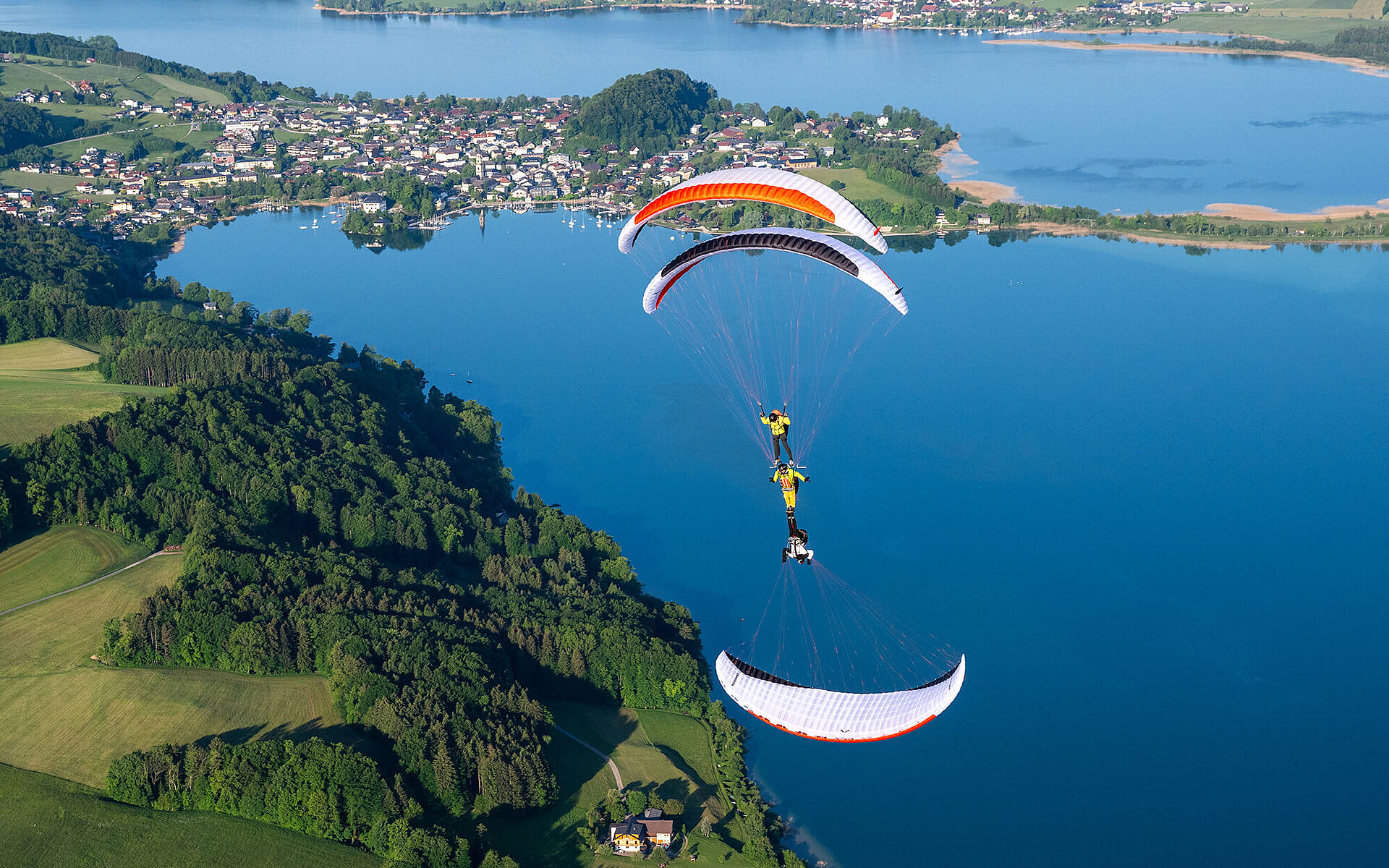
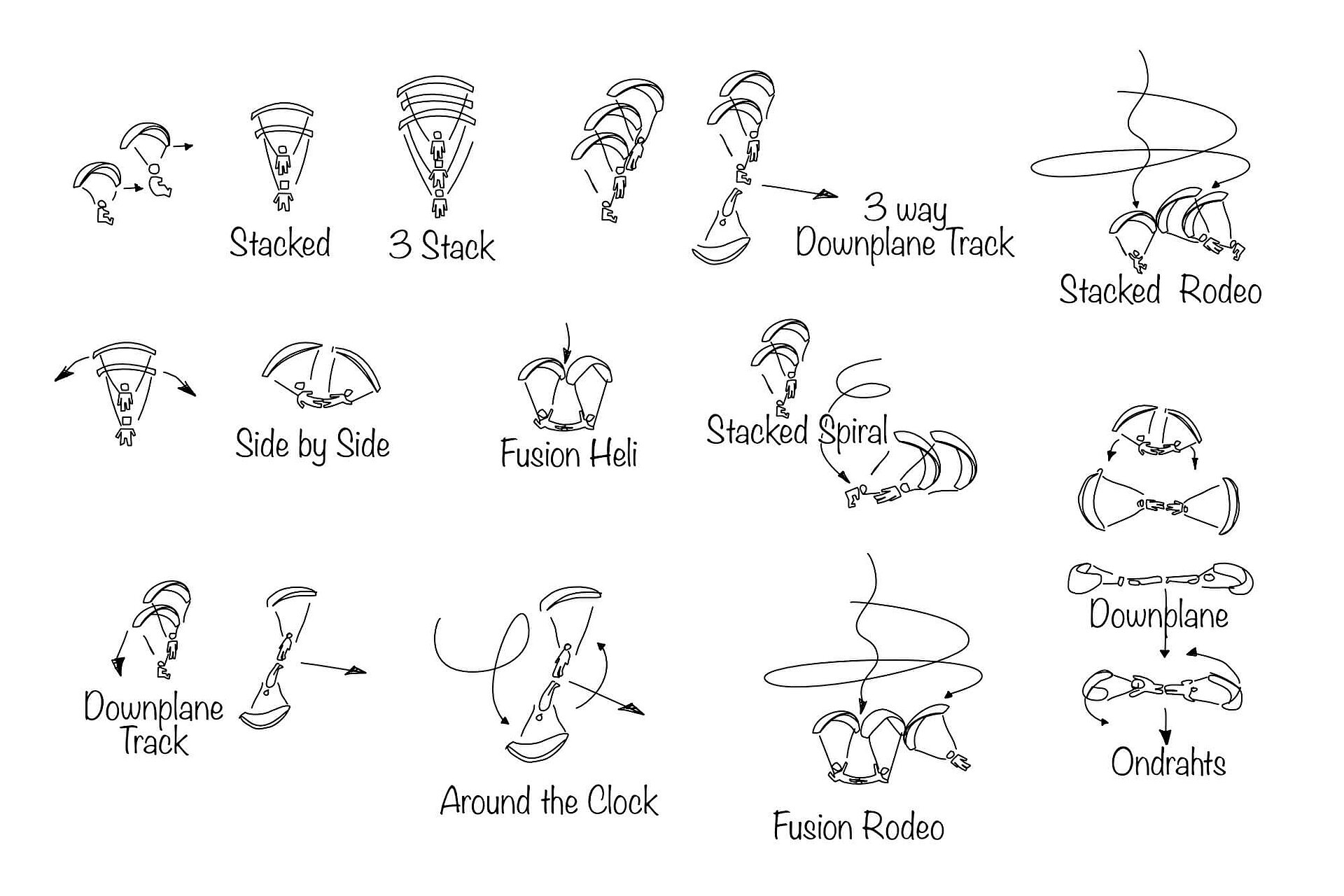
“So, we’ll be taken up to maximum altitude, then Norbert and I will climb onto the edge of the basket. Max, you’ll follow us shortly after, and we’ll start the maneuvers right away.” Three red and white paragliders are already hanging from the basket. When they reach the target altitude, Roland and Norbert exchange a quick signal, then simultaneously jump into the abyss in a rollover. Max follows seconds later. Norbert quickly approaches Roland from behind and hooks his feet onto his risers; the basic “cap” maneuver is complete. Now Max also docks, and Roland goes into the downplane track via a side-by-side landing, meaning he’s upside down beneath his two friends. Three bodies, three paragliders – a perfectly timed choreography.
Technology that deserves trust
To withstand these extreme stresses, special materials are needed. “For example, we reinforced the lines on our paragliders,” Roland recalls. The right equipment is crucial for such maneuvers to succeed. Team Airbound therefore flies with the OMIKRON acro model, which, in addition to stability, also allows for additional aerobatic maneuvers at shows. The three paragliders are absolutely identical so that they react in exactly the same way in flight.
Aerodynamics at the limit
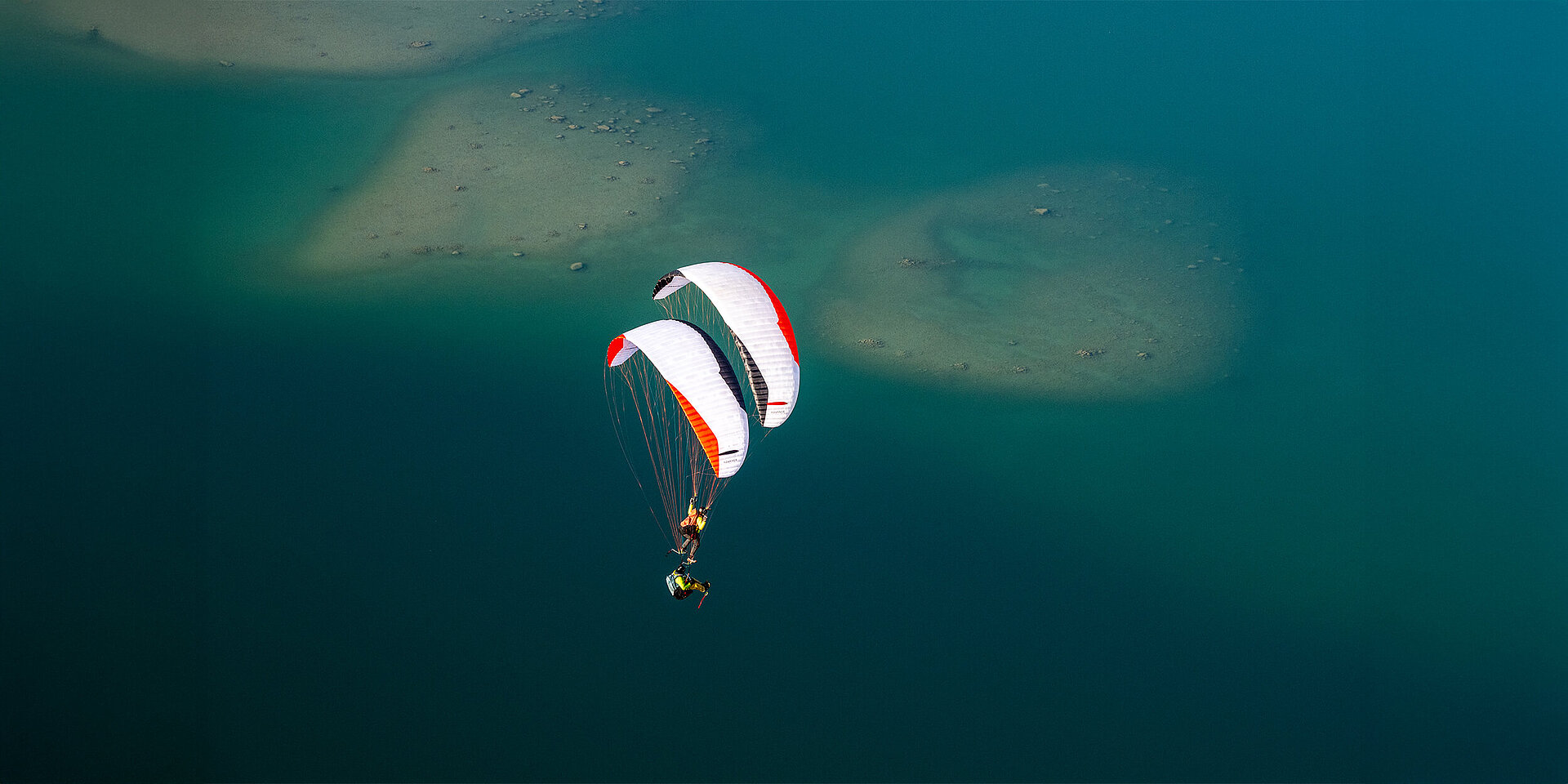
In a so-called downplane track, two connected paragliders fly seemingly upside down towards each other – a sight that amazes even experienced pilots. But why doesn’t the lower paraglider collapse? The answer lies in aerodynamics: Both paragliders generate lift in opposite directions, resulting in a high relative speed within the overall system. This speed ensures that even at the unusual flight angle, sufficient dynamic pressure is created inside the canopies – keeping them open.